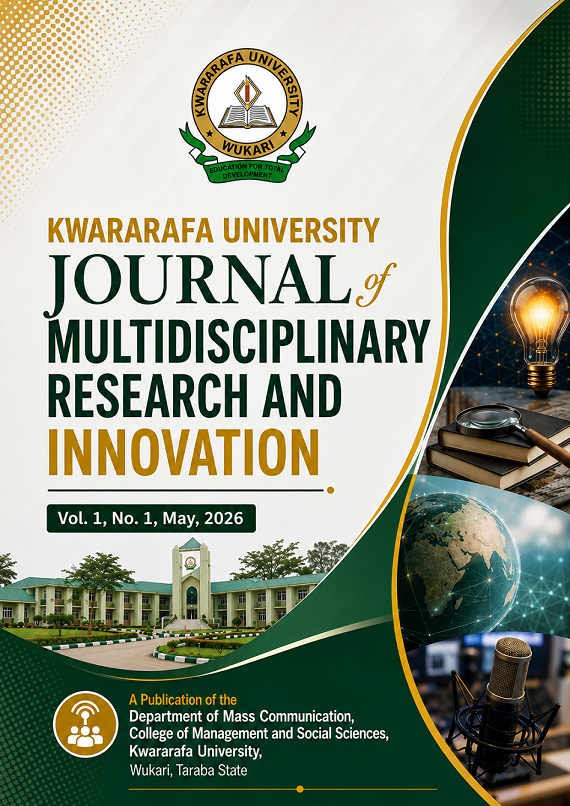
A MIXED-METHODS ANALYSIS OF MEDIA LITERACY AS A MODERATOR OF THE RELATIONSHIP BETWEEN SOCIAL MEDIA USE AND MISINFORMATION BELIEF
DOI :
https://doi.org/10.5281/zenodo.20585610Résumé
The increasing use of social media as a primary source of information in Nigeria has raised
concerns about the rapid spread of misinformation, which can influence public opinion, decision
making, and social behaviour. Despite the prevalence of false content online, there is limited
understanding of how media literacy shapes the relationship between social media use and
misinformation belief. This study aimed to examine the moderating role of media literacy in the
relationship between social media use and misinformation belief among Nigerian social media
users. A mixed-methods research design was employed, combining quantitative surveys with
qualitative interviews to provide both statistical and contextual insights. The target population
consisted of Nigerian social media users, with a sample size of 20 for the quantitative survey and
10 for the qualitative interviews, selected using purposive sampling to ensure participants were
active social media users and familiar with online content verification practices. Primary data were
collected through structured questionnaires measuring social media use, misinformation belief,
and media literacy, as well as semi-structured interviews exploring participants’ experiences and
strategies for engaging with online content. Quantitative data were analyzed using descriptive
statistics, correlation, regression, and moderation analysis, while qualitative data were examined
through thematic content analysis. Findings indicated that social media use significantly increased
misinformation belief, media literacy was negatively related to misinformation belief, and media
literacy significantly moderated the relationship between social media use and misinformation
belief, reducing its impact among more literate users. Based on these results, the study
recommends the implementation of targeted media literacy programs in educational institutions,
the integration of fact-checking and literacy-promoting tools by social media platforms, and the
encouragement of reflective and critical consumption practices among users. These measures are
expected to enhance digital resilience and reduce the societal risks associated with misinformation.
Téléchargements
Téléchargements
Publié
Numéro
Rubrique
Licence
© Kwararafa University Journal of Multidisciplinary Research and Innovation 2026

Cette œuvre est sous licence Creative Commons Attribution 4.0 International.